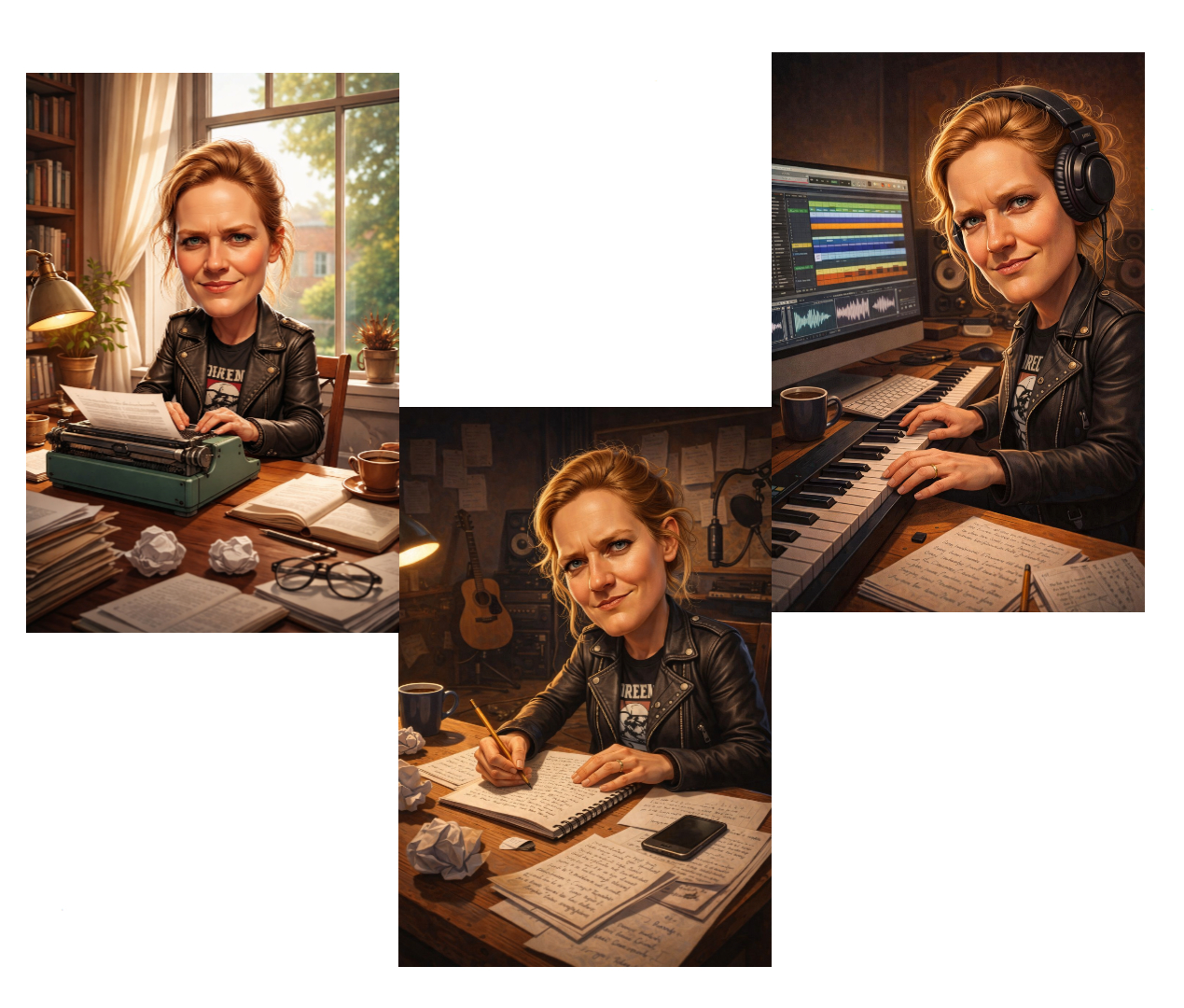

Capturing Ideas Before They Fade
Songwriting has been a constant thread throughout my life — long before technology began reshaping how music can be created and shared. I’ve written across genres for decades, always guided by story, melody, and emotional authenticity. Like many writers, I captured ideas whenever inspiration struck — sometimes in the quiet of night, sometimes in the middle of a busy day — using whatever was nearby: cassette recorders, handheld devices, or later, my phone.
Those recordings weren’t meant to be perfect. In fact, many of them were messy. I might be half-whispering a melody so I wouldn’t wake anyone, humming while driving, or singing through a cold just to preserve the idea before it vanished. If you’ve ever had a lyric arrive unexpectedly or a tune that wouldn’t let go until you recorded it, you know the feeling. The goal was never performance — it was preservation.
The Singer I Once Imagined
In my early twenties, I loved the idea of being a singer. I imagined standing behind a microphone with confidence and ease. But life has a way of redirecting us. Responsibilities grew, priorities shifted, and singing practice slipped further down the list. I didn’t train daily or maintain vocal discipline, and over time I accepted that my strongest contribution was as a writer, producer, and creative collaborator behind the scenes.
Still, I never stopped recording ideas. And importantly — I never threw them away. I moved files from drive to drive, rescued sessions from failing hardware, and held onto decades of material simply because it felt wrong to lose pieces of my creative history. There were moments of panic — that sinking feeling when a hard drive starts making strange noises — followed by relief when files were recovered. Anyone who’s lost creative work understands how deeply that hits.
When the Past Became Useful Again
Years later, those habits opened a door I never expected.
Advances in vocal modeling and audio processing made it possible to train systems using my own archived recordings — over twenty years’ worth — allowing my voice to be translated into finished productions. This wasn’t about replacing anything or pretending to be something I’m not. It was about expressing melodies and phrasing that were always mine, using the vocal identity that originated with me.
The first time I heard the result, I remember thinking:
“Wow… that’s me.”
Surprise and excitement hit at the same time. It felt cool, a little surreal, and meaningful in a way I didn’t fully anticipate. Part of me felt like I was reconnecting with a younger version of myself who once dreamed of singing. Another part of me was simply fascinated by the creative possibilities unfolding in real time.
And there’s something uniquely satisfying about hearing your own voice move through different genres — styles you might not have explored before. It doesn’t erase the years or change the path taken, but it adds another layer to the journey.
Imperfect Recordings, Lasting Value
Looking back, those imperfect demo recordings carried emotional nuance, phrasing, and instinct that couldn’t be recreated later. They captured moments — excitement, frustration, hope — that became embedded in the music itself. What began as scratch takes turned into a personal creative archive, a timeline of growth and experience.
Voice as One More Instrument
Today, I view voice as one more instrument in my creative toolkit. Songwriting remains the foundation. Storytelling remains the purpose. Technology is simply another means of expressing ideas and expanding possibility.
If there’s one thing I’ve learned, it’s this: creative journeys rarely follow straight lines. Sometimes the things we preserve out of habit or sentiment become meaningful in ways we couldn’t have predicted. Music evolves. Tools evolve. And artists evolve right along with them.
If you’ve ever rediscovered an old idea, found inspiration in an unexpected place, or reconnected with a creative part of yourself you thought was left behind — then you probably know exactly what I mean.
— Marilyn Oakley
Honoring the past, creating in the present, and listening for what comes next